
What Is Retail Merchandising? How Brands Run It


- What is Retail Merchandising?
- The Retail Merchandising Process on a Store Visit
- Why Retail Merchandising Execution Matters
- Common Retail Merchandising Challenges
- Closing the Retail Merchandising Execution Gap
- What a Dedicated Execution Partner Adds
- Key Elements of a Strong Retail Merchandising Strategy
- The Future of Retail Merchandising
- Conclusion
Retail merchandising is how a product is placed, displayed, stocked and promoted in a store so shoppers find it and buy it. For a brand, it means making sure every store gives its products the agreed shelf space, displays and POSM, and being able to prove it, store by store.
What is Retail Merchandising?
Retail merchandising is the strategic process of planning, organising, and presenting products in a way that maximises sales and enhances customer experiences. It covers everything from product displays and store layouts to pricing strategies, promotional campaigns, and inventory management.
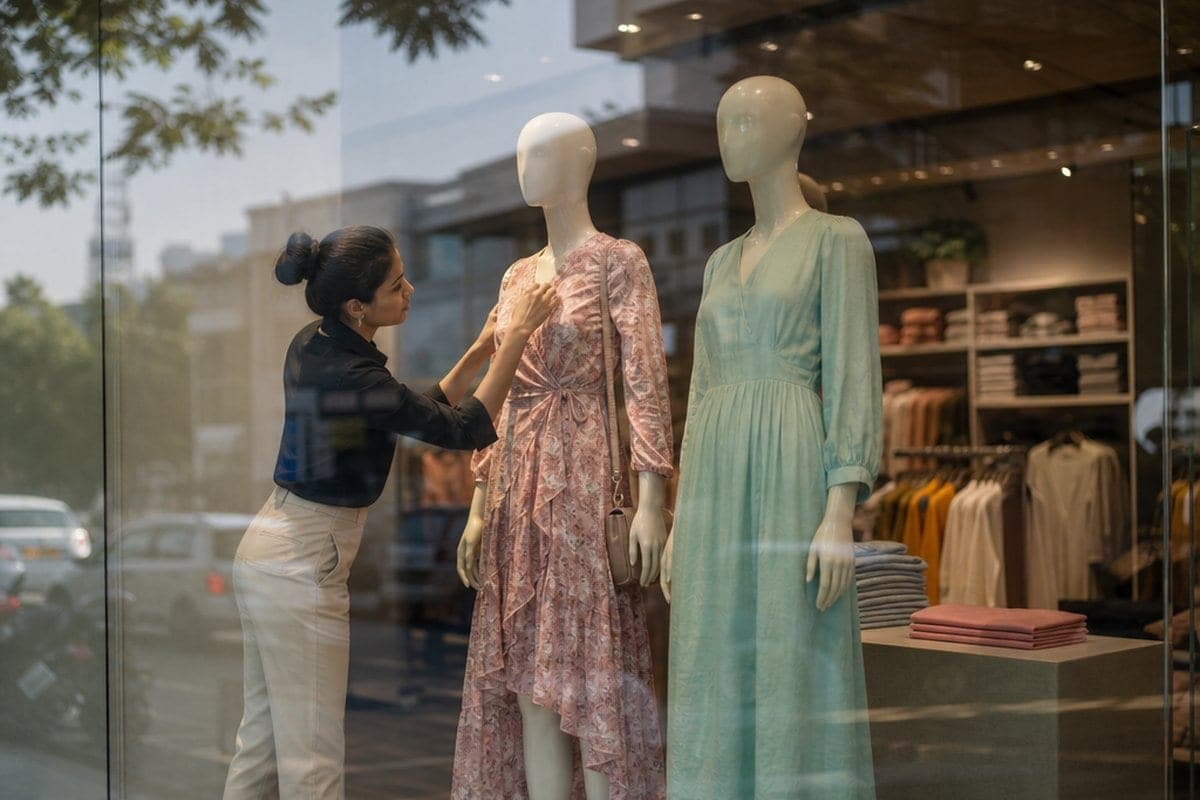
Visual merchandising is one part of it: how the display looks, from fixtures and windows to lighting and signage. Retail merchandising also covers the shelf work around the display, such as stock, placement and promotions. Our visual merchandising guide covers the design side.
The Retail Merchandising Process on a Store Visit
For a brand selling through Indian retail, most merchandising happens on store visits, and how a visit runs depends on the channel. In modern trade (supermarket and hypermarket chains), the shelf plan is agreed with the chain, and the merchandiser makes sure each store follows it. In general trade (kirana stores and neighbourhood counters), there is no plan from a head office: shelf space, display spots and POSM are agreed with each store owner, one outlet at a time. That is where most of the shelves are. General trade still carries about 85 to 90% of India's mass grocery retail, across an estimated 13 to 14 million kirana stores.
On our programmes, a POSM visit runs in this order:
- Reach the store and mark the visit in the field app.
- Photograph the store, then the product display before any POSM goes up.
- Put up the POSM, with the store owner's agreement.
- Photograph the display again with the POSM in place.
- Submit the visit's KPIs, which leaves a digital proof of the visit and the work.
If the store owner says no, the POSM doesn't go up. That is why our merchandisers also attend dealer meets where POSM deployment is discussed. Every installation proof is logged in 1Channel, so the brand can check the location and quality of the work. Our general trade merchandising and POSM deployment pages show how these programmes run.
Why Retail Merchandising Execution Matters
Even the best retail merchandising plan is only as good as its execution. Brands often find that despite thorough planning, the on-ground reality tells a different story. Marketing assets may be deployed late or placed incorrectly, fixtures may deteriorate over time, and store fit-outs may lack consistency across locations.
Poor execution leads to missed opportunities for customer engagement, weakened brand presence at the point of sale, and wasted investment in marketing materials that never reach their full potential. This makes reliable, expert-driven retail execution a critical success factor for any brand operating in physical retail.
Common Retail Merchandising Challenges
Brands across industries face a recurring set of challenges when it comes to retail merchandising execution. Understanding these pain points is the first step toward solving them.
- Asset Deployment Gaps: Point-of-sale materials (PoSM) and signage frequently fail to reach their intended locations on schedule. Without a dedicated execution partner, brands struggle to ensure consistent deployment across multiple stores and geographies.
- Lack of Execution Expertise: Effective merchandising requires specialised skills, from placing assets for maximum visibility to adhering to brand guidelines precisely. When non-specialists handle these tasks, the results are often inconsistent.
- Limited Tracking and Verification: Without proper tracking mechanisms, brands cannot verify whether assets have been deployed as planned. This lack of visibility makes it difficult to measure the effectiveness of merchandising investments.
- Retail Fixture Deterioration: Fixtures and displays in retail environments endure heavy foot traffic and daily wear. Without proactive maintenance, they can deteriorate quickly, undermining brand image and reducing in-store impact.
- Store Fit-Out Complexity: Coordinating multiple vendors and stakeholders for store fit-outs often leads to delays, miscommunication, and inconsistent execution across locations.
Closing the Retail Merchandising Execution Gap
Each of the challenges above is answered by the same small set of capabilities, whether a brand builds them internally or hands execution to a specialist merchandising partner.
Full-Ownership Asset Deployment
An execution specialist takes complete ownership of PoSM deployment, so every piece of signage and marketing material is placed correctly and on time. Treating execution as a core competency removes the inefficiencies that arise when non-specialists handle these tasks.
Advanced Tracking and Reporting
Purpose-built technology provides real-time insight into deployment progress. With geotagged photos and inventory tracking, brands can verify execution status and see how their merchandising assets are performing across locations.
Trained Merchandising Teams
Teams trained in brand-specific guidelines, display techniques and visual merchandising best practices are what keep quality and consistency stable regardless of location or scale.
Proactive Fixture Maintenance
Maintenance services keep retail fixtures in optimal condition. Regular inspections, timely repairs and preventive care ensure a brand presents its best face even in high-traffic retail environments.
Store Fit-Outs From Plan to Handover
Managing the entire store fit-out process from planning to final handover, with all vendors and stakeholders coordinated centrally, is what delivers consistent, on-brand results across every location.
What a Dedicated Execution Partner Adds
Brands that hand merchandising execution to a specialist rather than absorbing it into existing roles tend to gain in four areas.
- Efficiency: Outsourcing execution saves internal time and resources while producing more consistent outcomes across locations.
- Transparency: Real-time tracking and reporting provide visibility into every stage of execution, so decisions rest on evidence rather than assumption.
- Scalability: A partner set up for multi-location work can extend from a single city to a national footprint without compromising on quality.
- Expertise: Teams that handle retail execution across industries bring specialised knowledge to each deployment.
Key Elements of a Strong Retail Merchandising Strategy
A successful retail merchandising approach covers multiple interconnected areas. Here are the core elements every brand should focus on.
- Product Placement and Display: Strategic placement of products at eye level, near high-traffic zones, and alongside complementary items drives visibility and encourages impulse purchases.
- In-Store Signage and Branding: Well-designed signage guides customers through the store, highlights promotions, and reinforces brand identity at every touchpoint.
- Inventory Management: Ensuring shelves are always stocked with the right products prevents lost sales and delivers a positive customer experience.
- Seasonal and Promotional Campaigns: Timely execution of seasonal displays and promotional setups keeps the store fresh and aligned with current marketing initiatives.
- Planogram Compliance: Following approved planograms ensures consistency across stores, making it easier for customers to find products and for brands to maintain their visual standards.
The Future of Retail Merchandising
Retail merchandising continues to evolve as brands seek smarter, more efficient ways to engage customers in-store. Technology is playing an increasingly important role, from AI-powered deployment planning that identifies the most impactful store locations for specific assets, to digital tools that enable real-time monitoring and verification of merchandising execution.
Sustainability is also becoming a priority, with brands seeking eco-friendly merchandising materials and more efficient deployment processes that minimise waste.
Conclusion
Retail merchandising is a critical driver of sales and brand visibility, but its success ultimately depends on flawless execution. From asset deployment and fixture maintenance to complete store fit-outs, every element must be handled with precision and consistency to deliver meaningful results.
Key Takeaways:
- Retail merchandising encompasses product placement, signage, inventory management, and promotional execution, all working together to create a compelling in-store experience.
- The biggest challenge for most brands is not strategy but execution, as the gap between planning and on-ground deployment leads to wasted investment and missed opportunities.
- In general trade, the shelf is agreed outlet by outlet, so photos from every visit are how a brand knows what was done in each store.
- Technology-driven tracking and proactive maintenance are essential for verifying deployment and maintaining brand standards over time.
